Sunday, October 23, 2022

BLOOD DAUGHTER

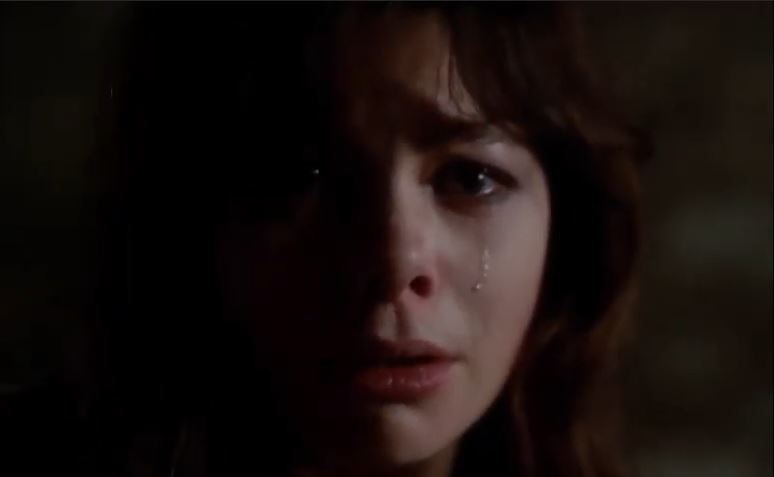
This will not be an objective post by any means - it's as much a celebration as a review or analysis. The fact is, my good friend and occasional collaborator Bryan Enk is screening his new work this month. It's called Blood Daughter, and it's his latest in an ongoing series of work (dating to his very first films) based on Bram Stoker's Dracula (the novel, and Coppola's film). This new movie brings Alex Johnson, the daughter of longtime cast member Chuck Johnson, into the extended family of collaborators in the title role. I am the first civilian to have seen the movie. I am delighted to say it's the finest work Bryan has ever done.


Bryan casts his net even farther out this time, brining in elements, appropriately enough, of Dracula's Daughter and Nadja (and, in a key moment, Murnau's Nosferatu) as he pushes the story, begun in 1993, to the present, in which daughter Abby lives in a tower, her needs being met by her father and a number of servants kept in his thrall. Abby seizes the initiative and kicks off a battle for her own soul, which fractures into various fragments with which she spars as the moment of reckoning approaches.

For those familiar with Bryan's earlier films there's much to enjoy in seeing his gang back together, here as the same characters at significantly older ages - Andy Hunsaker's Claudius is clearly wearied from the intervening decades of investigating fucked up paranormal shit; hilariously, the late-40s David Jarrell brings the same youthful mannered pomposity to Lord Henry that he did in 1994, like he stepped directly into this one from Dracula Returns

I wondered if many of the tight references to the earlier work would be lost on those coming to the corpus for the first time. Word from the initial screenings is that the resonance of these moments is felt, if not fully understood, by those meeting these characters for the first time. But Bryan's knack for fleet but slaying throwaway gags remains as sharp as ever, as does his ability to mine supernatural tension from concrete, every day settings and detonate little dream bombs with recurring phrases and images. Even if you're meeting these characters for the first time there's much to sink your teeth into.

And then there's Alex.


Alexandria Johnson has been present in this series, quite literally, from her birth (announced by the director in a meta-epilogue to Bryan Enk's Dracula). She takes focus here in thirteen roles (full disclosure: I'd missed a couple until reading Bryan's helpful list), and makes the single greatest, auteur-qualifying contribution I've ever seen an actor make to a Bryan Enk film. The dance between the earlier films and this new one, between youth and age, the various selves of the characters, is the most ambitious thing I've ever seen Bryan attempt, and Johnson's performances (as Abby's various selves and holy shit as the characters of the previous movies) are crucial to how fluid and effortless it all seems. The style of interacting close-ups continues as Abby and her Father begin their conflict in earnest (and Jeff Miller plays the weariness of eternity better than many on-screen vamps) - when the two finally collide in frame together the impact is fraught and thrilling.

I don't know what future this thing is going to have - whether it will become a festival sensation, an eagerly discussed movie that brings deserved attention to the earlier films, or yet another low-budget horror flick lost among the sea of them in the anonymizing streaming landscape. I'm invested in it, and am hopeful that the light of my friend's film does make it to the entire world, even more. Mainly, though, I just hope you get to see it, and dig it. Don't be afraid. Do as you will.

Thursday, June 2, 2022

CRIMES OF THE FUTURE (2022)

It's very much an old master returning to the stage with a greatest hits collection, which is no bad thing. There remains much pleasure to be experienced seeing and feeling the familiar technosex/bioport/ stilted dialogue/coexistence of analog and digital technologies (and what that coexistence suggests about the chaos of our time). But it's not the recognizable tropes that had them running for the exits at Cannes; on the other hand if you want the familiar, you deserve what you get seeking it in the corpus of David Cronenberg. 

He ups the in-world stakes in a way that will alienate part of his audience, especially in the US at this particular moment, but it only underscores the urgency of the questions he's always been asking, questions that he (and we) are running out of time to explore: what are we making of our world? How are we changing to adapt to it? Do we possess not just the capability but the faith necessary to discard what we knew to embrace a future that may be better than our present? 


On top of all of this: excellent use of the spaces in Athens to underscore the movie's themes; uniform commitment on the part of the cast; one of the best kisses I've seen in a movie of late; and the thing's funnier than you'd expect.


Wednesday, December 15, 2021

BENEDETTA

Anyone cornered by an atheist at a cocktail party knows that militant denial can be just as tedious as blind piety. You don't have to be among the faithful to be bored by films that bash religion. I'm as mindful (and weary) of the centuries-long and still ongoing cruelties and violence inflicted in the name of God. I fear that Hollywood has embraced the same awareness, to the point that filmmakers are allowed to indulge in a form of religion-bashing that makes for uniformly lazy storytelling. Jo Brennan's carefully articulated review of Rose Glass' SAINT MAUD helped me understand why these movies have failed - for the most part, having made the observation that the church is corrupt, or that faith is the habitat of the delusional or the traumatized or the hypocrite, some filmmakers may be left sitting on a smug cushion of "oh did I just BLOW YOUR MIND?" while their movie just stops, having nowhere else to go.


To be sure, Paul Verhoeven casts a whole lot of aspersion on the church in BENEDETTA; particular attention is paid to the tight grip the church makes on finances (the Abbess even makes the blunt point that her convent is not a charity), as well as the naturally human impulses that fly in the face of religious comport, human urges that only intensify under the weight of religious duty. And the thing has willful, even giddy, irreverence all through it, from its basis in the story of a 17th century lesbian nun to the fact that it's, y'know, a movie by Paul Verhoeven (who announces his intent from the start with not one, not two, but three scenes of scatological eruption blasting forth in the first half hour).

But the movie benefits strongly from Verhoeven's masterful touches. The hypocrisy of the church is revealed with a great deal of earthy humor (there is legend-level nun-side-eye in nearly every scene - just because they're devout doesn't mean they lack opinions), and Verhoeven and cast are as uninhibited in delivering Benedetta's visions as they are her sex scenes. There are generous cinematic allusions as well, mainly to Verhoeven's movies (Benedetta's sexuality confounds authority as strongly as Rachel's in BLACK BOOK; oddly, we also get a few nods to ROBOCOP, especially in the first third) but also Hitchcock's (a nun's ascent up a tower leads to an earthly plummet, as in VERTIGO - and what else is the inspired dildo but 2021's best Macguffin?).


But where Verhoeven leaves the wanna-be-blasphemers in the dust is in his earnest appreciation for, and preservation of, the mysteries of faith. The ambiguity is what drives this thing, as are the questions it raises that it is too smart and generous to answer for us. The earnestness with which Benedetta's love for Bartolomea intertwines with her love for Jesus is palpable; like Jesus, she squares the human with the divine in perfect harmony, and the true hypocrisy of the church manifests in its inability to recognize or understand this (indeed, that Benedetta attains her divinity through embracing her pleasure scares THEE SHIT out of the patriarchy, aghast that she, not they, were chosen.) The mystery is preserved right through the final title card of the epilogue, after which Verhoeven's credit tags the thing as loud as a thump on a Bible. The movie is funny, raunchy, downright horny, human, and ambiguous; and only one truly possessed by faith could have made it. Hallelujah, and amen.


Monday, August 16, 2021

THE GRAPES OF DEATH

Some of the greatest horror films are the saddest, the ones that capture the melancholy of being far from what you know, and knowing you will never return. The empty train that takes you to a world you no longer recognize. The friend who disappears. The newcomer who, through the sheer oddness of his body language, seems to bring hell with him. The landscape that looks too, too calm, the unsettled emptiness that surrounds you, wide open and free and making you know that nothing you knew no longer exists over the horizon. The intensifying nightmare around you, as everyone you meet is either deranged and psychotic or as helpless as you. And even when you find the one person you were heading toward in the first place they too have changed, and are begging for death. You don't feel the event that triggers all of this, it's just a slow escalation, a feeling of drowning when there's no water in sight. The finality that arrives and settles, for good, now that everything you knew is gone. 


Zombie horror is rife with movies that explore this emptiness. There may be no modern cinematic zombie more iconic than the first: Bill Hinzmann's awkward but suited creeper shuffles in under thunder as NIGHT OF THE LIVING DEAD opens, wandering aimlessly through the empty cemetery before turning his sights on Barbara and Johnny. Hell does indeed come right behind him. And it explodes in George Romero's follow-up DAWN OF THE DEAD; the first third of the movie sketches in unforgettably economical terms how a zombie outbreak would lead to the absolute end of civilization, gelling nowhere so convincingly as when Fran's co-worker stares into space announcing, as he starts to truly grasp it, "Our work here is finished."

That horrible void literally spreads around the world, and a melancholy becomes pronounced in movies like Lucio Fulci's ZOMBI; there we start to feel that all bets really are off when dead people start moving and killing (the walking dead rarely feel so fundamentally wrong as they do in this film), and Fabio Frizzi's despondent main theme seems set to the rhythm of society's final heartbeat. Werner Herzog is more grandiose in NOSFERATU-PHANTOM DER NACHT; Klaus Kinski lends to his anti-human, parasitic Dracula an absolute helplessness to stop the feeding frenzy that is slowly murdering the world, and the victims can only live it up and get drunk even as the rats and coffins stack up around them.


With a resume that includes multiple surreal erotic vampire stories and hardcore pornography, Jean Rollin may not appear to be one who'd uphold this approach. To modern eyes used to the by now well-established tropes of modern zombie horror, THE GRAPES OF DEATH plays it surprisingly straight (indeed, it was Rollin's first critical and popular success.) The film makes more explicit the environmental threat that lurks in many of Romero's films: here, a new pesticide contaminates a remote French vineyard, infecting all who drink the wine made there with a disease that rots them physically and psychologically. The infected share with Kinski's Dracula an occasional terrible awareness that they are powerless to stop the violence they spread.


But the dream space Rollin actively investigated in his earlier work lends an expansiveness to THE GRAPES OF DEATH that only underscores its horrors. We experience the story largely anchored to Elizabeth (a sympathetic turn by Maria-Georges Pascal) and see this nightmare grow through her eyes. Though she weathers a number of one-on-one encounters with increasingly diseased and terrifying ghouls, many of the film's most striking moments see her isolated in expansive settings, airy but suffocating, as we see her options disappear around her.


Though Elizabeth's passivity is irksome to some viewers (just as Barbara's near-catatonia in NIGHT OF THE LIVING DEAD was, despite it being a logical response to the horror surrounding her), Pascal manages to hold our sympathies as her situation disintegrates. Anchored in the immediacy of her reality, her environment immerses us, and through her perspective we watch, we feel the world sliding beyond our control. Her reality becomes a nightmare, and we feel her hopelessness as that nightmare contaminates reality. Philippe Sissmann's sparse analog score feels even sadder than Frizzi's - it wouldn't surprise us to see him tinkering on a keyboard just out of frame, looking resignedly out into an abyss. The movie seems not to end as much as stop, and sticks with us so deeply that we feel that walking away from the movie will only take us deeper into its landscapes. I don't think we necessarily need to live in a world in which a pandemic continues to rage and keep us isolated from our loved ones to feel Rollin's void resonate powerfully post-experience, but it's sure as hell helping. 


Wednesday, February 17, 2021

the cat-turd on the cupcake

So late October 1993 I'm visiting a friend. Said friend is busy the weekdays I'm with him so I'm alone in his place. Waking up on my own damn schedule, I've time to myself. On two of those days, I figure, well I know he's a right-wing bogeyman but I've never actually seen his show directly so, in the interest of engaging alternative viewpoints to one's own, I spend the noon hour, on two consecutive days, watching The Rush Limbaugh Show.

I remember this was the time Al Gore was running around pushing hard for NAFTA, engaging the wiry H. Ross Perot in debate over the issue. To my surprise, Limbaugh credited Gore with winning that argument and laughed Perot off as an unhinged lunatic. So I thought well, alright what else does he have. My memories of specifics are hazy (by all means, if your recall of what you watched in October '93 is more crystalline than mine, please sound off), but I sure as shit remember how I felt at the end of both episodes: that for about the first two-thirds the man spouted rational, sometimes dull, occasionally-relatable common sense, but by the end of the episode he'd say at least one thing so heinous, at best illogical at worst out-and-out hateful, that just cast aspersions over even the agreeable shit.


You're at a buffet party, and you're walking along a dessert table upon which is placed a grid of totally passable, maybe even tasty-looking, cupcakes. You think yeah I'll give one of these a try but upon reaching the end of the table the cupcake you're about to grab has a cat-turd, placed oh-so-artfully, in the center of its icing. You draw your hand back, thinking, well, I'll grab another one but the cupcakes across the entire table (which are, at a glance, about 90% cat-turd free) now all seem suspect.

Anyone I spoke to about Limbaugh's show (aside from those who embraced all of it) noticed a similar ratio: yeah, anyone can be down with about 75% of it but that other 25% is just unconscionable. That 25% would be cherry-picked and soundbitten over the ensuing decades held up both as upright and correct straight-talk by rightists and lamentable dialectical evil by the left. (I'm positive the DNC raised thousands, if not millions, from those outraged by Limbaugh's excesses, and thus amplified his outrages among their consituents - it's why I'm convinced the Boeberts and MTGreenes of the Trump Republicans will never be ousted from their seats, as their hateful blathering provides too much easy copy for fundraising emails.)

And in fairly short order the inherent cruelty of that 25% became a political party's entire platform. More and more of the party faithful, confronted with that spread, went straight to the cat-turd cupcakes out of preference and chowed down. (Many, many more, who were initially more comfortable in the rational, common sense-fuelled 75% would eventually shrug and dive into those tainted cupcakes, out of loyalty or weird expediency. And they could no longer argue from a place of rationality without their opponents smelling the cat-shit on their breath.)

He should have been held at arm's length; instead he was amplified and held aloft. Discourse was coarsened and eroded, and his hatred and pettiness, his sexism, racism, homophobia, transphobia etc. etc. etc, is now the standard of one of America's leading political parties. May he descend quickly, and may all who blindly parrot and echo his utter contempt follow in short order.

Sunday, January 31, 2021

top two, 2020

It's too, too late for a list, and I'm not even qualified to make one, really; for most of the last year my movies have come through the same screen as my news, my work, my socializing, etc. etc. etc. and a certain amount of weariness has set in as I feel an exhaustion that is, at this point, universal. It is a small thing, indeed, to not have been able to dive into cinema as usual, and a smaller problem, still, in the face of so many others. But it's a facet of what's been lost this year, a calamitous toll that even a modest retrospective like this must acknowledge.

So what I haven't seen outnumbers what I have: FIRST COW, the SMALL AXE series, SOUL, POSSESSOR, MANK (though I've little interest in that one, oddly), and many of the other heralded masterpieces of the year have gone by. In these times of nonstop anxiety and no-small-problems, the pain of not having had the experiences necessary to make any kind of guess as to the state of current cinema just calls attention to the larger issues plaguing all of us. Year-end list-making, in the face of that, seems a trivial indulgence, at best. I can't and won't list my ten favorites of what I saw and call that an educated guess as to what went down on our screens this year.

But two movies mattered deeply to me:

Made in 2018 in the run-up to the ascension of Bolsonaro, the queer Brazilian western BACURAU perfectly captured the mood of this fractious year; its arrival on American screens about a month into lockdown was just the rallying cry many of us needed. The story of a small Brazilian village beset by imperialist forces bent on its eradication struck a blow for the representation of those Bolsonaro would suppress. But its political urgency was matched with a knowing savvy for the thrills of genre cinema; without wanting to be too specific, it was the rare movie that captured the spirit of the work of John Carpenter beyond a shallow name-check. Between the passion of its politics and the effective staging of its suspenseful moments BACURAU emerges as one of the finest, and most galvanizing, action movies of recent memory.

If Kleber Mendonca Filho and Juliano Dornelles captured something universal about 2020, then Gaspar Noe (of all fucking people) cast a spell to create brighter things for 2021. Noe's eight-minute SUMMER OF '21 promotes a forthcoming fashion line from the house of Yves Saint Laurent, so naturally is a feast for the eyes. But fashion houses are, perhaps unsurprisingly, generous in the leeway they give artists to present their work (indeed, a friend reminded me that Moschino observed social distancing by showcasing a 2020 fashion line through an astonishing puppet show). And even as YSL seem to have reined in Noe's more antisocial impulses the powerful cinematic sensibility he's honed over the years - his fluid camera, his breathtaking use of split-screen, his intrinsic grasp of the power of music (here a knowingly-deployed remix by SebastiAn of the Summer/Moroder smash "I Feel Love") - is used to powerful effect here (as is a silent but theatrically-present grande dame performance by Charlotte Rampling). With its fashion mansion in the middle of a dark and Gothic forest the movie feels as occult as SUSPIRIA, and one doubts that its COVID-resonant imagery is accidental (it begins with a heroine alone in a disheveled tower, then fleeing from an unseen menace - we can all surely relate). The models take their places in an audience, distant from one another but present together in their moment, and the image feels like a hopeful telegram from an immediate future. 

May we all remain safe, and eventually re-congregate to share such moments. See you in the dark, eventually.


Thursday, December 3, 2020

quarante et un minutes pour le 3 decembre

fast track associations
appear on parade
appear on parade

Going on nine months under shelter-in-place, finding occasion today to celebrate 90 years of a filmmaker who has changed how we view cinema, how we view the world, how we view the world through cinema, how we view cinema through the world.

Stuck in semi-isolation from the world, noting firmly that it is NOT in accord with my desires, my mind jumps haphazardly from one thing to another. The isolation feels huge to me, but I have no illusions that my own perceptions are the world. My problems are tiny compared to the hundreds of thousands in my country alone who have died, and the families left mourning in their wake, and those who have recovered forever physically changed. Even as a new administration waits in the wings, their imminent arrival heralded by optimism and delight that finally there will be functional adults in charge, my anger remains at the administration that for the sake of raw power has allowed so many to be ground beneath the greed and stupidity of a homicidal septuagenerian toddler they allowed to take charge.

"And now there's Nazis again," laments a new favorite artist in a routine captured last year, through the same screen through which I take in news, entertainment, socializing. How sadly timely, then, the first episode of Histoire(s) Du Cinema, which posits (among many, many other things) that the explosion of World War II in 1941 was reality's revenge on cinema. How random and ugly the hate raging so strongly in the world that such forces are given such free reign to diminish our progress, to shit so wetly on our world, to undermine our imaginations, to deny the reality of the epidemic taking so many lives and livelihoods.

Forgetting about extermination is part of extermination itself.

The venues of pulp escapism are no help. Comic books are mired in their own capitalistic crisis of imagination - les Grand Deux, Marvel and DC, are both accepting their current lot as IP farms for big studios, the comics serving as placeholders, keeping their characters on ventilators to support their most important iterations on screen.

The King in Black, le Roi en Noir, began His invasion of comics yesterday, the first issue in the main book of a crossover that takes in damn near all of the heroes in the Marvel universe. A lifelong fan of comics, I want to be fired up by this thing, and I look at previews in vain for anything that will stimulate my imagination. All I see in the first nine pages are the beats of the same story - a massive threat from outer space approaching earth, the world's heroes gathering to counter it, the first waves of defense crumbling in the face of the oncoming threat.

I'm tantalized enough by the basic premise - that the main character among the heroes is steadily reformed villain/anti-hero Venom, a conflicted human given superpowers through his union with an alien symbiote that covers his face and body in a shiny black alien skin. The main villain, the titular King, is Knull, the alien monarch of such symbiotes.

On paper it's a richly evocative, sci-fi goth horror action epic, a grand war waged dans les ombres, and I look across sample pages for anything to hook me deeper in. I honestly can't tell from what I read if Donny Cates is a good writer or not (much as Matt Fraction's voice was completely drowned in the similarly far-reaching FEAR ITSELF crossover in recent memory). The script hits the same beats as universe-wide crossovers before it - the forces of INVASION! seem to have made a stop into Hot Topic before attacking Earth this time 'round, but there's nothing in what I see to suggest that anything is different in this current story that will once again change the face of the Marvel Universe forever. (Parenthetically, I note that Al Ewing's sterling IMMORTAL HULK book has a single-issue crossover with KING IN BLACK - it's a beautifully written, self-contained episode, but it would have worked with any other villain in the place of the symbiotes.)


plus ça change, 

plus c'est la même 

chose

And I feel my age as I recall my past (nostalgia = our pain), remembering the moment in 1983 when a comic changed me, when Ororo flew down from the sky to rejoin her teammates and shocked them, me, le monde, with her appearance. Her long white mane shaved to a mohawk, clad in punk/BDSM leather. A woman with superpowers in ink, showing this regular human boy in flesh and blood what and who it was.


As little as twenty years ago a writer now retired in disgrace dared to take Pekar's maxim that you could tell any story in words and pictures to the internet, and for a while a berserk imagination ran riot in comics as this man and those he inspired breathed life into the medium. More specifically, into the work of the Big Two.

But a dear friend reminds me that mainstream comics are now in a "shut up and play the hits" headspace, and I fully understand the market forces that are forcing that condition. And recognize all too well the fingerprints of faceless committee that turn that all-is-possible medium into so much


I can not shake the feeling that we're in a time when we need wild creativity to take us outside ourselves, and sketch out new possibilities. These necessities are intangible, and thus completely foreign to the MBAs in charge of what we see. I'm hoping the administration revving up to take center stage next month (no matter how grossly the current diva continues to make its curtain calls insisting that The Show Must Go On) will take to heart the necessity of these intangibles, that it realizes that a better future is not just a childish daydream of its youngest constituents.

I yearn not for a past in which wilder flourishes were possible. I yearn for a present where such flourishes occur with regularity, exploding from flatscreens and magazines, eating away at the fabric of our dull reality to form doorways into better worlds. Where they blow fresh air in our faces, allowing us, even masked, to truly breathe.

And so I'm watching Godard, and much of it flies right past me, but I savor the incredible poetic ideas that detonate cleanly in my head, delighting that this man remains alive and active and even now is finding ways to bend the medium. I've read that he's working on two different projects right now, and can't wait to see them.

It amazes me how radical even his simple, direct gestures are. I muse how powerfully it would hit if, five minutes into Avengers Endgame, the audience were confronted with white text on a black background, no sound


Could anything dropkick the audience into the story faster? It's such a basic idea that it's amazing no one does it. It would be the first thing the suits would cut from the movie.

Contempt remains, a dense and powerful story of The Dream Factory and those caught within it. A thrilling portrait of a brilliant artist pissing away the tall Hollywood dollars, and not a terrible place to start, if you're looking.


Bon anniversaire, sensei. Et merci.