Showing posts with label zombies. Show all posts

Monday, August 16, 2021

THE GRAPES OF DEATH

Some of the greatest horror films are the saddest, the ones that capture the melancholy of being far from what you know, and knowing you will never return. The empty train that takes you to a world you no longer recognize. The friend who disappears. The newcomer who, through the sheer oddness of his body language, seems to bring hell with him. The landscape that looks too, too calm, the unsettled emptiness that surrounds you, wide open and free and making you know that nothing you knew no longer exists over the horizon. The intensifying nightmare around you, as everyone you meet is either deranged and psychotic or as helpless as you. And even when you find the one person you were heading toward in the first place they too have changed, and are begging for death. You don't feel the event that triggers all of this, it's just a slow escalation, a feeling of drowning when there's no water in sight. The finality that arrives and settles, for good, now that everything you knew is gone. 


Zombie horror is rife with movies that explore this emptiness. There may be no modern cinematic zombie more iconic than the first: Bill Hinzmann's awkward but suited creeper shuffles in under thunder as NIGHT OF THE LIVING DEAD opens, wandering aimlessly through the empty cemetery before turning his sights on Barbara and Johnny. Hell does indeed come right behind him. And it explodes in George Romero's follow-up DAWN OF THE DEAD; the first third of the movie sketches in unforgettably economical terms how a zombie outbreak would lead to the absolute end of civilization, gelling nowhere so convincingly as when Fran's co-worker stares into space announcing, as he starts to truly grasp it, "Our work here is finished."

That horrible void literally spreads around the world, and a melancholy becomes pronounced in movies like Lucio Fulci's ZOMBI; there we start to feel that all bets really are off when dead people start moving and killing (the walking dead rarely feel so fundamentally wrong as they do in this film), and Fabio Frizzi's despondent main theme seems set to the rhythm of society's final heartbeat. Werner Herzog is more grandiose in NOSFERATU-PHANTOM DER NACHT; Klaus Kinski lends to his anti-human, parasitic Dracula an absolute helplessness to stop the feeding frenzy that is slowly murdering the world, and the victims can only live it up and get drunk even as the rats and coffins stack up around them.


With a resume that includes multiple surreal erotic vampire stories and hardcore pornography, Jean Rollin may not appear to be one who'd uphold this approach. To modern eyes used to the by now well-established tropes of modern zombie horror, THE GRAPES OF DEATH plays it surprisingly straight (indeed, it was Rollin's first critical and popular success.) The film makes more explicit the environmental threat that lurks in many of Romero's films: here, a new pesticide contaminates a remote French vineyard, infecting all who drink the wine made there with a disease that rots them physically and psychologically. The infected share with Kinski's Dracula an occasional terrible awareness that they are powerless to stop the violence they spread.


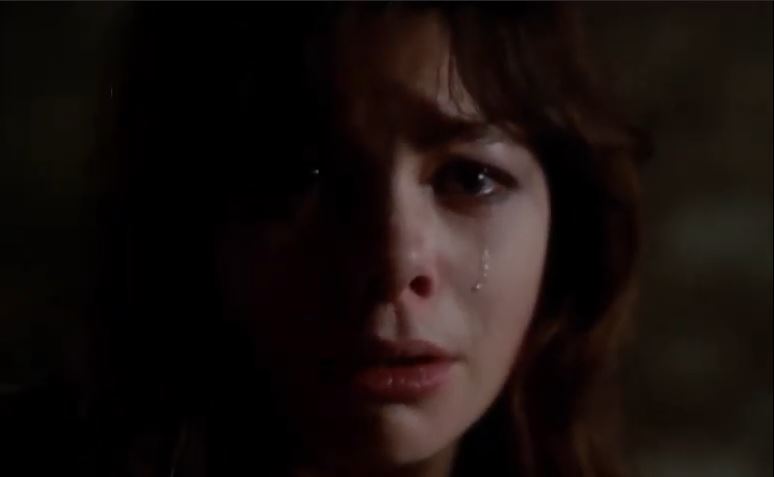
But the dream space Rollin actively investigated in his earlier work lends an expansiveness to THE GRAPES OF DEATH that only underscores its horrors. We experience the story largely anchored to Elizabeth (a sympathetic turn by Maria-Georges Pascal) and see this nightmare grow through her eyes. Though she weathers a number of one-on-one encounters with increasingly diseased and terrifying ghouls, many of the film's most striking moments see her isolated in expansive settings, airy but suffocating, as we see her options disappear around her.


Though Elizabeth's passivity is irksome to some viewers (just as Barbara's near-catatonia in NIGHT OF THE LIVING DEAD was, despite it being a logical response to the horror surrounding her), Pascal manages to hold our sympathies as her situation disintegrates. Anchored in the immediacy of her reality, her environment immerses us, and through her perspective we watch, we feel the world sliding beyond our control. Her reality becomes a nightmare, and we feel her hopelessness as that nightmare contaminates reality. Philippe Sissmann's sparse analog score feels even sadder than Frizzi's - it wouldn't surprise us to see him tinkering on a keyboard just out of frame, looking resignedly out into an abyss. The movie seems not to end as much as stop, and sticks with us so deeply that we feel that walking away from the movie will only take us deeper into its landscapes. I don't think we necessarily need to live in a world in which a pandemic continues to rage and keep us isolated from our loved ones to feel Rollin's void resonate powerfully post-experience, but it's sure as hell helping. 


Tuesday, February 12, 2013

WARM BODIES

Eight years after an unknown event brings the dead back to life to feast on the flesh of the living, one young zombie (call him R) shuffles through an aimless existence; though vocally reduced to monosyllables, R is able to take startlingly clear perspective on his life with a robust inner monologue. Protracted circumstances find him feeling oddly protective toward Julie, a young survivor suspicious of her undead savior. But R's growing feelings for Julie begin to have startling effects on both of them, and the shattered world around them.


WARM BODIES is certain to be deemed not-hardcore-enough by the zombie faithful. But though clearly pitched mainly at a young adult audience, its orientation is pitched toward fantasy rather than pig-guts-and-fake-blood. As such, it's absolutely charming, and disarmingly earnest. Nicholas Hoult is as adept at R's zombie meanderings as his glib, smart voice-over; Teresa Palmer offers a solid and believable young heroine in Julie. (Rob Corddry brings a nice energy to a solid supporting arc R's zombie peer M.) Jonathan Levine keeps the whole thing balanced, mixing some overt Shakespeare references, a nice wrinkle on zombie-unlife-as-contemporary-metaphor, and, most crucially of all, an unflinchingly sincere sense of romance. Whether or not the hardcore zombie crowd are open-hearted enough to accept it is open to question; the rest of us get to enjoy the spectacle of unabashed romantics injecting new life into the dead genre.

Wednesday, November 30, 2011

[REC]

A comely reporter for a late-night news show is trying to make the best of what promises to be a boring night covering the lives of firemen. An emergency call to the station has first responders (with their documentarians in tow) rushing into an apartment complex to aid an infirm old woman whose peculiar behavior has her neighbors fearing the worst. The video camera captures events as they escalate from bad to worse: the woman seems in the throes of a disease that is making her violent; the authorities have quarantined the building; and those trapped inside are dying horribly one by one. And they aren't staying dead.


If anyone is even thinking about making yet another first-person, shot-on-DV film about the zombie apocalypse, they need to take a good, long look at [REC], and be honest about whether or not their project will bring anything new to the table. Though filmmakers Jaume Balagueró and Paco Plaza are treading paths well-worn by low budget horror auteurs, their attention to character details, pacing, and documentary realism bring a bracing freshness and real suspense to what could have been yet another zombie flick. All genre familiarity goes right out the window as [REC]'s long horrible night unfolds, and even a final reel reveal that threatens to undermine the realism of the piece only serves to heighten our anxiety. The thing fucking works.

Thursday, June 3, 2010

GEORGE A. ROMERO'S SURVIVAL OF THE DEAD


The man's name seems to be in the title for this, and why not? As director of the films that defined the modern zombie as a shambling, flesh-eating reflection of our ongoing societal anxieties, he's certainly earned the right to have his work trademarked to differentiate it from his legions of followers and imitators. Indeed, since his more recent work in the zombie subgenre is quite minor in comparison to his first two masterworks, perhaps such branding will help set his current, lo-fi and low-budget fare apart from the similarly low-budget zombie films that litter the modern horror landscape.

There's no question that SURVIVAL OF THE DEAD lacks the scope and impact of NIGHT or DAWN, but your proprietor is hard pressed to see why that matters much. If SURVIVAL has the impact of a sketch in comparison to the wider canvases of the earlier films, there's enough variation on the formula (and some intriguing callbacks to previous work) to make it engaging. A small contingent of rogue military, led by the gore weary Sarge Crockett (Alan van Sprang, reprising a short role from Romero's previous), find themselves caught up in a feud between two Irish American clans on an island off the coast of Delaware. Romero offers an intriguing (if diffuse) parable for the mindless violence we perpetuate, and deploys the undead in more subtle ways to put his points across. The zombies occasionally even seem beside the point, until a lovely final image (a nice visual rhyme to the bald zombie that served as DAWN's main icon) ties it all together. A fairly large cast of unknowns do justice to the weird little human moments that Romero's peppered his script with. And of course there's a solid helping of good ol' zombie gore.

Some guys reach retirement age and turn to painting. Romero sticks to zombie films, crafting modest little works that still reveal a working and engaged aesthetic. I'll see the next one, too.