Showing posts with label 1970s. Show all posts

Monday, August 16, 2021

THE GRAPES OF DEATH

Some of the greatest horror films are the saddest, the ones that capture the melancholy of being far from what you know, and knowing you will never return. The empty train that takes you to a world you no longer recognize. The friend who disappears. The newcomer who, through the sheer oddness of his body language, seems to bring hell with him. The landscape that looks too, too calm, the unsettled emptiness that surrounds you, wide open and free and making you know that nothing you knew no longer exists over the horizon. The intensifying nightmare around you, as everyone you meet is either deranged and psychotic or as helpless as you. And even when you find the one person you were heading toward in the first place they too have changed, and are begging for death. You don't feel the event that triggers all of this, it's just a slow escalation, a feeling of drowning when there's no water in sight. The finality that arrives and settles, for good, now that everything you knew is gone. 


Zombie horror is rife with movies that explore this emptiness. There may be no modern cinematic zombie more iconic than the first: Bill Hinzmann's awkward but suited creeper shuffles in under thunder as NIGHT OF THE LIVING DEAD opens, wandering aimlessly through the empty cemetery before turning his sights on Barbara and Johnny. Hell does indeed come right behind him. And it explodes in George Romero's follow-up DAWN OF THE DEAD; the first third of the movie sketches in unforgettably economical terms how a zombie outbreak would lead to the absolute end of civilization, gelling nowhere so convincingly as when Fran's co-worker stares into space announcing, as he starts to truly grasp it, "Our work here is finished."

That horrible void literally spreads around the world, and a melancholy becomes pronounced in movies like Lucio Fulci's ZOMBI; there we start to feel that all bets really are off when dead people start moving and killing (the walking dead rarely feel so fundamentally wrong as they do in this film), and Fabio Frizzi's despondent main theme seems set to the rhythm of society's final heartbeat. Werner Herzog is more grandiose in NOSFERATU-PHANTOM DER NACHT; Klaus Kinski lends to his anti-human, parasitic Dracula an absolute helplessness to stop the feeding frenzy that is slowly murdering the world, and the victims can only live it up and get drunk even as the rats and coffins stack up around them.


With a resume that includes multiple surreal erotic vampire stories and hardcore pornography, Jean Rollin may not appear to be one who'd uphold this approach. To modern eyes used to the by now well-established tropes of modern zombie horror, THE GRAPES OF DEATH plays it surprisingly straight (indeed, it was Rollin's first critical and popular success.) The film makes more explicit the environmental threat that lurks in many of Romero's films: here, a new pesticide contaminates a remote French vineyard, infecting all who drink the wine made there with a disease that rots them physically and psychologically. The infected share with Kinski's Dracula an occasional terrible awareness that they are powerless to stop the violence they spread.


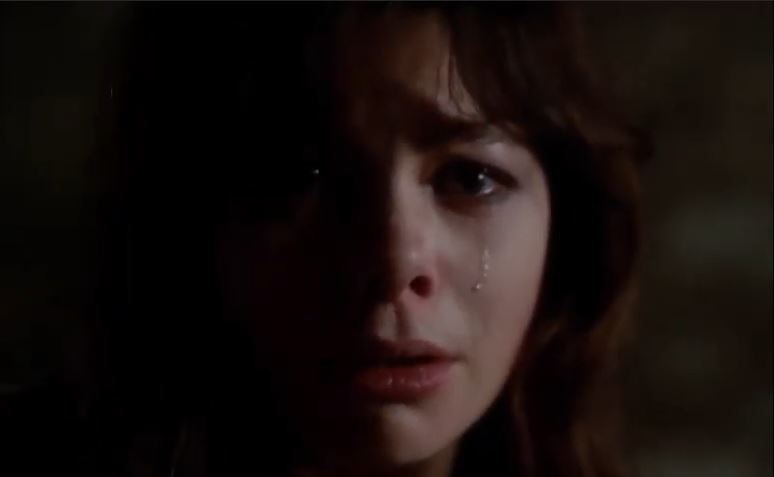
But the dream space Rollin actively investigated in his earlier work lends an expansiveness to THE GRAPES OF DEATH that only underscores its horrors. We experience the story largely anchored to Elizabeth (a sympathetic turn by Maria-Georges Pascal) and see this nightmare grow through her eyes. Though she weathers a number of one-on-one encounters with increasingly diseased and terrifying ghouls, many of the film's most striking moments see her isolated in expansive settings, airy but suffocating, as we see her options disappear around her.


Though Elizabeth's passivity is irksome to some viewers (just as Barbara's near-catatonia in NIGHT OF THE LIVING DEAD was, despite it being a logical response to the horror surrounding her), Pascal manages to hold our sympathies as her situation disintegrates. Anchored in the immediacy of her reality, her environment immerses us, and through her perspective we watch, we feel the world sliding beyond our control. Her reality becomes a nightmare, and we feel her hopelessness as that nightmare contaminates reality. Philippe Sissmann's sparse analog score feels even sadder than Frizzi's - it wouldn't surprise us to see him tinkering on a keyboard just out of frame, looking resignedly out into an abyss. The movie seems not to end as much as stop, and sticks with us so deeply that we feel that walking away from the movie will only take us deeper into its landscapes. I don't think we necessarily need to live in a world in which a pandemic continues to rage and keep us isolated from our loved ones to feel Rollin's void resonate powerfully post-experience, but it's sure as hell helping. 


Thursday, April 30, 2020

70s-ish Horror Stay At Home Double Feature

Different times.

This thing has sat unwritten for a while - it seems stupid to write about cult movies when such large and devastating issues are unfolding outside the House of Sparrows. But the House is safe on lockdown, well-resourced and comfortable, if cluttered. And one of life's deepest challenges is that it doesn't stop - we don't cease to be ourselves or lose our interests just because we're under quarantine.

Upping the internet bandwidth and speed on this end has been an absolute godsend, making for better newsgathering and vastly improved viewing options. Loath as I've been to dive into the whole streaming sphere the distraction has been more than welcome, and it's been good to finally catch up with things that had eluded me previously. (Indeed, in honor of Walpurgis Night, I think tonight is the night I finally take in Sarah Phelps' adaptation of Christie's The Pale Horse.) And it's been a pleasant surprise to find that the internet doesn't necessarily inhibit spontaneity (serendipity, even), that streaming movies occasionally co-mingle with the artful clarity of in-cinema double features. Two movies taken in on different platforms within 24 hours of one another had a lot to say to me, and each other.

Jack Starett's Race With The Devil has an absolute dream quartet of actors (Peter Fonda, Warren Oates, Loretta Swit, and Lara Parker) as two married couples who take off in an RV for an off-season vacation, and run afoul of a cult of Satanists who spend the last hour of the movie stalking and chasing them across half of Texas. It's wildly implausible and incredibly fun, with our heroes responding with the hysteria and anger you'd expect people to feel under such dire straits. And it's an engaging combination of horror movie and car chase caper, with mounting paranoia and truly inspired stuntwork throughout. It's gritty enough to engage on the grindhouse level, and one might be surprised to recall it slipped out into the world with a PG rating.


Horror filmmaker and musician Rob Zombie would have been around ten when Race With The Devil was released, and it's very easy to imagine the mid-1970s monster kid Zombie must have been seeing it multiple times. I hadn't intended to follow Race with a thematically similar motion picture, but Zombie's indie horror opus 31 would sit very comfortably beneath Race on a double bill, taking in as it does the story of a group of clowns who pile in a van and head off on a road trip only to run afoul of an oddly-aristocratic cabal who force them into a violent game with death as the stakes. (Sealing its kinship with the prior movie, the movie takes place on Halloween, 1976.)


31
clinched my suspicions that there are two Rob Zombies - a consistent-but-unimaginative writer and more-than-competent director - vying for supremacy of his brain, never mind his films. The story is a rote re-hash of The Most Dangerous Game that teases but doesn't pursue an obvious line of class-consciousness. But it's beautifully executed on a largely crowd-funded budget, unfolding in a palpably grimy setting shot through with moody atmosphere and striking use of color. There's always something to look at, and the textures of skin, wood, fog give it a tangibility that makes for effective horror (cinematographer David Daniels takes over for longtime Zombie shooter Brandon Trost and proves just as adept in making Zombie's outre world look and feel real.)


Most of the characters of 31 speak in the same colorful yet witless white trash patois that Zombie has been putting in the mouths of 85% of his characters since House of 1000 Corpses, and most of the villains stalking them through the movie's lethal factory maze match the cheerful vulgarity of the protagonists with a similarly Southern-fried sadism. The cast uniformly commit to and sell their dialogue - as limited as Zombie's scripts often are I can't recall an actor who did anything less than demanded of them. Many horror filmmakers have either a strong visual sense or a sure hand with actors, but Zombie has both, and I suspect that many actors who continue to work for Zombie genuinely enjoy doing so. (The most striking figure is cut by Richard Brake as nominal-lead heavy Doomhead, who brings such terrifying and charismatic intensity to his monologues that I wished they'd been written by almost anybody else.)


This double-feature of not great movies took the edge off a couple of quarantine days, and offered a welcome reminder that cinema remains a living, breathing thing. An actor's medium that presents you new work by old favorites and introduces new favorites in even less-than-auspicious settings (I'd pay real money to see Richard Brake's MacBeth). A venue for ever-new, visceral thrills. A companion and friend even, especially, in times like these. As my new favorite channel says so charmingly, stay home/stay alive, friend.

Tuesday, June 19, 2018

THE MAGIC FLUTE

Kind of a metamovie day this last Saturday - reading the lovely essay "On Moonlight Bay", in which Jonathan Rosenbaum charts his responses to the same movie over four viewings over three decades, so do I head to Berkeley to see Ingmar Bergman's The Magic Flute, for the first time since its mid-70s theatrical run in the US.

At four years old I'm pretty sure The Magic Flute was my first arthouse movie (though considering my parents, who knows?) There were only a few images from the movie that I remember from my first viewing, but I do recall being as obsessed as a four-year-old could be with the opera, listening to the album while reading the libretto (my father told me that my position in the libretto was always where the music was). What could possibly have been firing my synapses with regards to either Mozart's opera or Bergman's film at that age is lost in memory. And yet even after four decades of learning more about both Mozart and Bergman, having seen the opera performed live at least once, and having revisited Amadeus earlier this year, there were a couple of resonances between my viewings, then and now.

I remembered this dragon, for example, though as you can imagine it seemed a mite more fearsome to my four-year-old eyes. (And the thing resonated in my dreams - at some point in my childhood I vividly dreamed the opening of Act I, played out in a light show across a closed theatre curtain, a square of projected light representing Tamino, a long line of projected light representing the dragon pursuing him. A fun conflation of opera, avant-garde theatrics, and 4-bit video game.)

The fairy tale aspect of the opera is beautifully amplified in the film - the whole thing feels pitched to four-year-olds on one level. But it's rife with the experimental touch Bergman brought to earlier movies. It takes in both the story of the opera and the lives of the singers and crew backstage. The audience of the opera is seen as well, and Helene Friberg (who was only a little older than I when I saw the film) appears in close-up throughout, her reactions serving as a chorus to the thing.

Bergman explodes the theatrical space as wildly as Busby Berkeley, though where Berkeley went macro, sending his musical numbers into a gigantic cinematic space, Bergman goes micro, framing his characters in closeup, rendering their props with more minute detail than any prop handler would muster. Perhaps as a nod to the opera's Masonic elements, an occult connection is played up through various images and the recurrence of prime numbers: there are three ladies (of the Queen of the Night) and three child-spirits, seven ladies in attendance, and Bergman ups the ante in act II by giving us thirteen priests.


Familiarity with both the opera and Bergman's work gave me many more ways into the film than I had at four. The story of the opera as presented in Milos Forman's Amadeus stuck with me, suggesting that Mozart's association with the Theater auf der Wieden began when he attended a parody of one of his operas the company presented. I mused that The Magic Flute was therefore Mozart's Dark Room opera (given my own association with that local, parody-driven but fun theatre), and I was pleased that the film did nothing to dispel this impression. The film also felt like Bergman's own "Lady From Shanghai," a sub-genre of movies, somewhat instinctively defined by me, modeled on Welles' film: a genre-driven film, sometimes compromised or on the cheap, in which a great filmmaker finds space to flex his/her aesthetic muscles.

Through this viewing, of a new DCP struck by Swedish cultural authorities, I found myself amused by the subtitles (by Annika Brant, I stuck to determine). They of course conveyed what the singers were saying, but I noticed that, unusually for subtitles, they were plotted to the meter of the music, placing character names exactly where they occurred in the lyrics. The subtitles added another layer of fun to the whole thing as I counted off beats with each syllable in the subtitles (which went truly above and beyond in making it all rhyme!). Once again, over four decades later, I found myself scanning the words closely, staying on point with the words and action on screen, resonating in mind and heart with the unfolding opera. The beat goes on.

Monday, October 2, 2017

The SHOCKtober Revision

I wanna post a mess of things for this, the Halloween season. I always begin with big intentions and then life gets in the way. I'm hoping it will not be so this time around and, emboldened by already having twice as many posts on the House this year as last (though that's a low bar to clear), I'm hoping to have twice as many posts for October as thru the whole year so far.

So a bit of a cheat, here, though I sincerely hope you'll find it useful. Long time hero-of-me Stacie Ponder is also feeling similarly prolific over on her revitalized Final Girl, and she's resurrected SHOCKtober!, in which she solicits her readers to submit their favorite horror films and then counts down from least to most popular. I submitted a list last time but didn't consult it when submitting anew. You may see the below as an evolution of my tastes, though honestly I believe there are more tried-and-true selections this time out than last. For both lists, however, I restricted myself to one film per filmmaker and no more. And both are submitted in the event you're looking for something appropriate to watch over the next month - if you get a chance to give any of the following eyes, your proprietor says go! Can you stand the excitement?


At ease, Leslie.

THE LIST (including links to my reviews, if they exist):

The Abominable Dr. Phibes (Fuest, 1971)
The Beyond (Fulci, 1979)
Black Sabbath (Bava, 1963)
The Brides of Dracula (Fisher, 1960)
Byzantium (Jordan, 2012)
Cat's Eye (Teague, 1985)
Creepshow (Romero, 1992)
Crimson Peak (del Toro, 2015)
Dust Devil: The Final Cut (Stanley, 1992)
Eve's Bayou (Lemmons, 1997)


Exorcist III (Blatty, 1990)
Ginger Snaps (Fawcett, 2000)
Ju-On: The Grudge 2 (Shimizu, 2003)
Kuroneko (Shindo, 1968)
Lair of the White Worm (Russell, 1988)
The Moth Diaries (Harron, 2011)
Phenomena (Argento, 1985)
Prince of Darkness (Carpenter, 1987)
Son of Frankenstein (Lee, 1939)
Wolfen (Wadleigh, 1981)

Friday, December 11, 2015

THUNDERCRACK!

One is tempted to believe that director Curt McDowell demanded no rewrites from screenwriter/performer George Kuchar for this black-and-white, nearly three-hour art/porn psychodrama. This is not a complaint: THUNDERCRACK! may be the most uninhibited movie your proprietor has ever seen, and its ultra-low-budget, super-staged histrionics are so forthright that it feels like an emanation directly from the id of its makers.

James Whale's The Old Dark House is a clear, direct inspiration for this movie, and hovers over it like a sleazy uncle at Thanksgiving. Like that movie, a raging thunderstorm strands a disparate set of travelers at Prairie Blossom, a remote and creepy house. Also like that movie, yet even moreso, the storm seems the result of heavy psychic vibes emanating from the disturbed inhabitants of the house, in this case the wildly unhinged Mrs. Gert Hammond (a fearless Marion Eaton). The audience is voyeur to a number of unsimulated sex acts, and eventually we feel as swept away by the deranged undercurrents as any of the characters.

But for all of the movie's campy theatrics and melodramatically overblown dialogue, there's an undeniable artistry at work within it, with the characters' emotional states rendered powerfully through off-kilter but intense closeups. And the commitment to the juicy excesses of Kuchar's dialogue is heroic across the board. And Mark Ellinger's piano-driven score plays at just the right distance, adding with gentle irony yet another level to the lunacy on hand (even the slide whistle deployed during one memorable erotic moment is perfectly placed.)

Thundercrack! isn't a movie I'm sure I need to see again, but damn right it's a movie I'll never forget.

Tuesday, May 28, 2013

THE LEGEND OF THE 7 GOLDEN VAMPIRES

Sometimes you need to clear the cobwebs and just talk about a movie you enjoy. And some movies just roll over your critical faculties until all you can do is enumerate the ways in which the movie is awesome. THE LEGEND OF THE 7 GOLDEN VAMPIRES is such a movie. And it is awesome for so, so many reasons.


A co-production of Hammer Films and the Shaw Brothers, LEGEND is every bit as delightful as you'd hope from that promising combo. Professor Van Helsing (Peter Cushing), on a lecture tour of China, finds his words and warnings falling on deaf ears. But the student Hsi Ching (David Chiang) is all ears, and enlists the good doctor on a mission to liberate his village from the death grip of a cult of insidious vampires. And we just kick back and watch the two halves on this co-production find some awesome common ground, as Hammer atmospherics and earthiness serve as a springboard for honorable kung fu warriors taking on a slew of HK-style hopping vampires and the hideously-made-up vampire disciples that control them.

The American edit, THE SEVEN BROTHERS MEET DRACULA, feels more like the desperate cash-in on the kung fu craze that the movie fundamentally was (and I suspect it was cut to fit on the bottoms of double bills). What's charming about LEGEND is that it feels less like a cash-in and more like a conversation, with two directors well versed in their respective traditions (Roy Ward Baker and a shamefully uncredited Chang Cheh) giving and taking, with a script that puts these traditions on equal, mutually respectful footing.

And holy crap, look at Cushing.


Cushing must have been about 60 when the cameras started rolling on this, and one can only speculate on what he thought of the insane movie he'd been drop-kicked into. But damned if he doesn't give it his all. You get your usual authoritarian and involving delivery of vampire history, and his dialogue with Chiang is absolutely winning, elevating the thing into a charming, East/West buddy movie. And though Cushing doesn't fly on any wires or execute any flying kicks, he's not too old to get his hands a little dirty in the fight sequences (see above). A look into the archives (including Cushing's costume sketches for the film) suggests that he was no less engaged in working on this film than any of his others. And it's easy to imagine him looking around the set, watching these fighters executing their choreography, shrugging and saying "I'll do what I can." And then going to work.


And that's as fine an image to hold of the man on this, the week of his centenary. Wishing the late Peter Cushing a very happy 100th birthday, and submitting this piece in honor of the Peter Cushing Centennial Blogathon happening all week.


Sunday, January 15, 2012

THE DUELLISTS


Keith Carradine and Harvey Keitel are intriguing casting choices for this, Joseph Conrad's tale of a pair of forever-fighting French soldiers. A mild spat over soldierly duty turns into an ongoing feud that the men take across numerous Napoleonic battlefields and through three decades, eventually achieving notoriety among their countrymen even as they observe the strict protocols governing such feuds.

Casting a pair of Americans was a savvy move on director Ridley Scott's part: perhaps there's some subtle commentary on American militarism intended, or perhaps their Americanness serves as an alienness that sets our heroes (heh) apart from their countrymen (who, in turn, are played mostly by British thespians). In any event, the story of the conflict waged by these two men is absolutely engrossing; the characters that surround them are uniformly well-played (Tom Conti stands out as a gentle physician all too familiar with the toll of warfare on men's bodies and spirits); the combat scenes are suspenseful (including a bizarre interlude in which Carradine and Keitel must fight side-by-side); and it ends with what is surely one of the most gloriously ambiguous sunrises in film history. This is a favorite of many of my peers; after finally seeing it theatrically it may well be one of mine.

Wednesday, October 19, 2011

Halloweens

Some extremely random notes on the franchise:


-The first film is simply a masterpiece. John Carpenter had copped to the influence of Howard Hawks with Assault on Precinct 13, and it's interesting to think what Hawks would have made of this assignment. The thing is buoyed by its mythic antagonist, youthful sister-killer turned embodiment of ultimate evil Michael Myers, and as realistic and well-realized as the town of Haddonfield, Illinois feels, it is but a setting for a highly formalistic exercise in suspense. The movie is a well-calibrated tool with the purpose of keeping its audience on edge. More than thirty years on it remains absolutely fresh and involving, and impossible to skip by on television without being absorbed into it anew.

Credit to the two lead performances: Jamie Lee Curtis is a completely relatable heroine, filled with recognizable neuroses. Her reactions to the mounting terror around her are nothing but believable. Laurie's arc grows richer with each viewing: among other things, knowing what she goes through in the final reel gives significant weight to her assurance to her young charge that "I'm not going to let anything happen to you." Believe it.

Donald Pleasance is at the other end of the innocence spectrum, the sole voice of reason and experience that goes under-heeded until it's too late. Though Michael's an imposing and menacing presence throughout, it's the terrified intensity that Pleasance brings to Loomis that makes the threat real. And dig the little arc of Loomis' stakeout of the Myers place - scaring off the kids from behind the shrub, then seconds later getting a scare of his own from the sheriff's hand. Perfectly executed comic miniature.

Add to all of this the film's substantial musical accomplishment (with Carpenter himself providing the most recognizable and insistent horror movie theme this side of Jaws), plus the invaluable contribution of director of photography Dean Cundey (whose work on this immediately catapulted him into prominence) and you've got a pretty terrific little horror film. Given the quality of the film, plus the insane box office it reaped back (after such a minimal investment) during the first years of the franchise era of American filmmaking, it was inevitable that its forumlae would be copied. And that sequels would follow.

-Halloween 2? Not so good. Mired in an unnecessary deepening of the bond between Laurie and Michael, the film is too much a by-rote slasher. One can't help but be a bit disappointed that the movie abandons both the abstraction and the realism of its predecessor to follow the template of its imitators. There's a sense of fatigue, here - even Pleasance, whose pronouncements gave the first film real weight, is just firing them off over his shoulder, like he's trying to get to the pub at the end of the shoot. Perhaps in response to the growing popularity of the Friday the 13th films, a bunch of gore effects were added outside Carpenter's involvement - the film plays a bit better without them. As to the film's invocation of Samhain (and Pleasance's surprising mispronunciation of same), it pretty much captures the movie's overambition (in explaining too much) and half-assedness.

-Halloween 3: Season of The Witch was a GREAT fucking idea, trying to spin the title into a Michael Myers-less franchise of Halloween-related tales, guided by many members of the original creative team (particularly Dean Cundey, and Carpenter himself present as producer and composer). The story of a sinister plot to unleash a pack of Celtic demons upon the world through a toy company's mask promotion is, um, more than a little muddled, but Cundey's gorgeous photography and some spirited performances more than make up for any problems at the plot level. Special mention to Daniel O'Herlihy, who's on the record saying he didn't think much of the material but that he had fun making it anyway. It shows.


-Halloweens 4-6 were quickly ejected by many fans from continuity, but hold up as a watchable (if over-complicated) trilogy of low-rent horror films that nonetheless have their own pleasures.

For one thing, the credits sequence for Halloween 4 is one of my favorite cinematic depictions of autumn:


They're more entertaining than 2, on the whole, and are mainstays on cable television these days. I must admit that when one of them rolls onto television on my nights in, I wind up watching through. The triptych involving Michael's pursuit of a niece (while being pursued, in turn, by Sam Loomis) while a weird cult starts to manifest around him is undemanding but engrossing. Donald Pleasance takes it very seriously, which helps to no end. He clearly felt a bizarre kinship with the series, stating at one point that as long as Michael kept coming back, Sam Loomis would necessarily be there. Halloween 6 was among his final films, and is, sweetly, dedicated to his memory.

-Speaking of which, there's also a strange cult surrounding the producer's cut of Halloween 6. I can't speak to the differences between the versions (though this post has been months in the writing, it was only ever intended to be a quick run-through), though I will say that, despite even this cut being a bit muddled (thanks to the film's insanely troubled creative history) there are a few noteworthy pleasures in 6 that make it more than worthwhile, including an engaging supporting turn as Tommy Doyle by Paul Rudd. Rudd brings a little humor and soul to the kind of resourceful, smart male we really rarely see in slasher films, and the film culminates in a THRILLING fight scene between Tommy and Michael. Directed by Joe Chappelle, before his tenure directing THE WIRE.

--The oddly titled Halloween H20: 20 Years Later, like many horror fans, completely ignored the continuity of Halloweens 4-6 and returned the focus to Laurie Strode, seen struggling as a single parent while working as a teacher at a scenic prep school. Save for the omnipresent theme music, John Carpenter's touch is absent from this film, which has a weird Scream-like pacing and look (the casting of various attractive TV-ready young things doesn't help - Laurie and her high school friends in the first film looked, acted, and FELT like late-70s teenagers). But the movie has some of Scream's verve and wit, as well, with Adam Arkin scoring considerable points as Laurie's lovelorn colleague (the TV edit cuts a hilarious piece of dialogue he has with his students, where he cheerfully matches their wrongness with playful sleaze of his own). The film juices the duality between Laurie and her supernaturally evil brother (a confrontation through a porthole clinches it), and Jamie Lee Curtis plays the final reel like it's fucking Medea or something, stalking her brother through the empty halls of her school, and indeed, her very consciousness.


--The rest of the franchise is sadly pretty crap - Halloween 2 director Rick Rosenthal was brought back to helm the profoundly ill-conceived Halloween: Resurrection, which begins with a well-paced but detestable prologue that dispatches Laurie Strode (and, by natural extension, Jamie Lee Curtis) from the series entirely. As if following the example of fans who have therefore decided to banish the film from memory, the rest of the film strives to be absolutely forgettable, with Michael stalking a group of kids filming their tour of his house as part of an internet reality show you know what just fuck this

--Rob Zombie's reboot of the series doesn't interest me a whole lot. His two films continue to call up the things that I admire about aspects of his style (his knack for capturing a very particular and very lively white trash patois and dialogue) while reminding me of all that I dislike about his style (like putting that particular and lively patois in the mouths of damn near all of his characters). And all that shit with the white horse in his second film was just fucking stupid.


And given that I've been handling this piecemeal for more than a year, I think it's time to just publish the fucker. Thanks for reading.

Wednesday, January 19, 2011

KILLDOZER!


Your proprietor was smitten with this film as soon as Stacie Ponder posted the above image during the stellar Shocktober list-o-rama last year. The name rang a bell from my (now-ended) years of MST3K viewing, but some research showed that it was based on a story by Theodore Sturgeon (an accomplished science fiction writer, and author of some fine episodes of OG Star Trek). And it was not available on video. But some stalwart soul grabbed it on the SciFi Channel back in the day, and put it up on YouTube in eight parts. And so tonight, recovering from an illness, I finally went through the thing chapter by chapter.

And the thing just moves, briskly introducing an otherworldly menace that sets down among a half dozen American construction workers on a Pacific island, infecting one of their vehicles with malevolent life, and then setting murderously upon them one after another. At 75 minutes it's a novella-length film, suffering from none of the padding or dead spots that plague similar made-for-cable productions today and benefiting from richly (if economically) written characters, salt of the earth men played by salt of the earth actors. Each actor makes the most of the morsels given him, including some downright Hemingwayesque philosophizing.

Which plays into one of the film's strengths: these characters behave in completely logical ways given the bizarre circumstances they're in. They're stunned with disbelief. They mourn. They bicker. They drink. They confiscate alcohol. They fight. They joke. They share their darkest, deepest thoughts. In one devastating moment, one resignedly closes his eyes as mechanized death bears down upon him. And in the last minutes, the survivors scramble to make a last, desperate grab for life.

The film's joke-status notwithstanding, there's much to be appreciated here, even (especially) from a non-ironic perspective. The movie doesn't try to live down its low budget, but delivers an economical and thrilling little story that it's smart enough to reach. If The Criterion Collection decided to release this on disc, complete with the Sturgeon story in a booklet (like they did with Patriotism or Mr. Arkadin) and maybe (just spitballing here) an optional new audio track by someone like, say, Robin Rimbaud, I'd pre-order that sucker immediately.

Tuesday, November 16, 2010

WESTWORLD


The futuristic theme park Delos, for $1000/day, caters to the traveler's wildest fantasies. Three different realms, capturing life in ancient Rome, medieval times, and the American West, are peopled with androids whom guests can kill or have sex with. A pair of vacationing businessmen take a trip to Westworld, where they encounter comely barmaids, brawlin' desperadoes, and a taciturn gunslinger (Yul Brynner) that won't stay dead.

One assumes that first time feature writer-director Michael Crichton was paying serious attention to the films made of his earlier work, because Westworld is an assured fucking filmmaking debut. Crichton is as adept at showing as he is at telling - Westworld's descent from tightly-controlled paradise to hellish technological riot is expertly paced, reflected in the increasingly frantic performances of the actors playing humans (which itself is terrifyingly offset by the steady stillness of the actors playing androids). Crichton lets his scientists tell us the mechanics of what's going wrong, but the larger reasons why they're going wrong (and the implications for our lives outside the theatre) are left for us to ponder. And the film balances its philosophizing with a profoundly visceral feel, making us feel every death and escalating the stakes as the lone survivor makes a desperate run for survival, dogged by Brynner at every step. The sound design is particularly fine, with beautifully canned cowboy music gradually being overwhelmed by sinister electronic drones that hum with the same kind of semi-organic malevolence that animates Brynner.

Westworld is not widely heralded as a classic, but its influence can be felt on may classics that followed it, from the work of John Carpenter (who modeled unstoppable killing machine Michael Myers on Brynner's gunslinger) to James Cameron to, hell, to Crichton himself (Jurassic Park really is Westworld with dinosaurs). There's really not much attention paid to Crichton's work as a filmmaker, and Westworld suggests that a retrospective would not be remiss. Among other things, it'd please your proprietor to see Looker projected.